

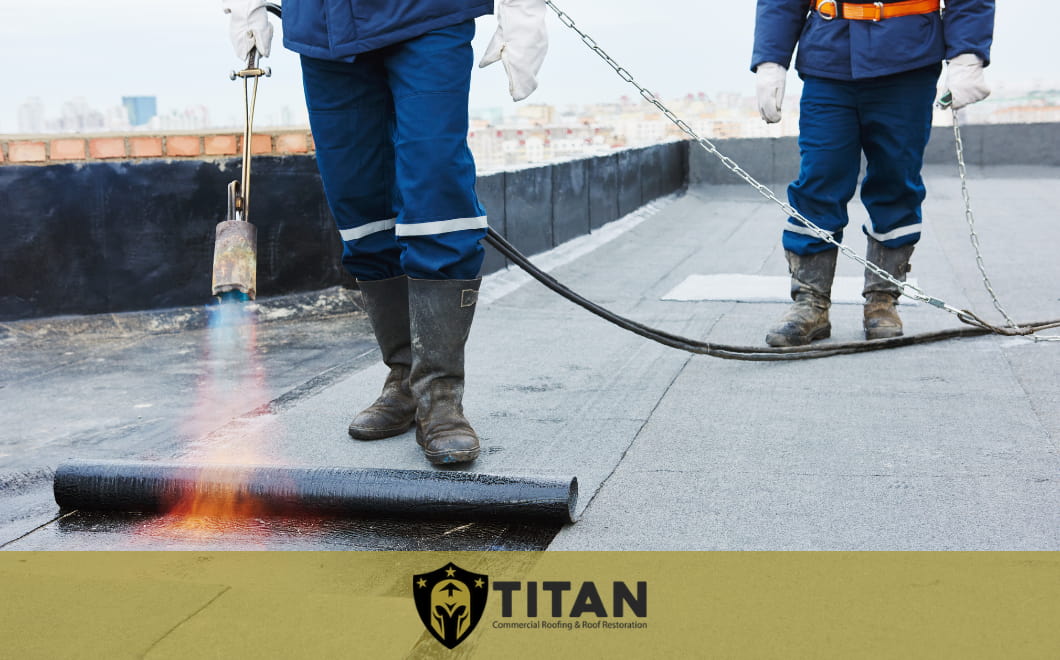
Modified bitumen can simply be explained as a workhorse material: popular on commercial buildings, but also a smart fit for certain residential roof designs.
In this guide, we’ll break down what modified bitumen is, the real world pros vs cons, and the best use cases, so you can decide if it’s the right low-slope roofing solution for your property.
What Is Modified Bitumen Roofing?
Modified bitumen (often shortened to “mod bit”) is an asphalt-based roofing system designed for low-slope or flat roofs. Think of it as an evolution of traditional built-up roofing (BUR), improved with polymer modifiers that enhance flexibility, strength, and temperature performance.
Most modified bitumen membranes fall into two categories:
- SBS (Styrene-Butadiene-Styrene): More rubber-like and flexible, often preferred in regions with frequent temperature swings because it handles expansion and contraction well.
- APP (Atactic Polypropylene): More plastic-like and UV-resistant, typically offering strong heat and sun performance.
Modified bitumen roofs are usually installed in multiple layers: a base sheet, one or more ply sheets (depending on the system), and a cap sheet that provides the top protective surface. Cap sheets may be smooth, mineral-surfaced (granulated), or coated for extra UV protection.
Installation Methods – How Mod Bit Roofs Are Applied
Torch-down roofing uses heat to melt the asphalt layer and bond the membrane to the substrate. It creates strong adhesion, but it requires strict safety controls due to open flame.
Cold-applied modified bitumen uses adhesives instead of heat. It’s often selected for projects where flame use isn’t ideal, such as occupied buildings or areas with stricter safety requirements.
Self-adhered modified bitumen comes with a peel-and-stick backing. It can speed up installation and reduce odors and fumes, though proper surface preparation is critical for long-term performance.
Pros of Modified Bitumen Roofing
Strong durability and puncture resistance are major reasons mod bit remains a top choice for commercial roofing. Compared to some single-ply options, modified bitumen can better tolerate foot traffic from maintenance crews, rooftop equipment access, and occasional impacts—especially when properly installed with reinforced layers.
Excellent waterproofing performance is another advantage. Modified bitumen membranes are engineered to shed water and resist leaks, which is essential on low-slope roofs where water drains more slowly than on steep-slope systems.
Commercial roof repair is a practical win. If a section is damaged, it can often be patched without replacing the entire roof. This is especially appealing for facility managers looking for a long-term, serviceable roofing system.
Weather flexibility, particularly with SBS systems, makes modified bitumen a reliable choice in areas that see hot summers and cold winters. The membrane can flex with temperature changes and helps reduce cracking that might occur with more brittle materials.
Cons of Modified Bitumen Roofing
Modified bitumen is reliable—but it’s not perfect, and knowing the downsides helps you plan smarter.Seams and installation quality matter. Like many flat roof systems, modified bitumen relies on correct seam bonding. If seams aren’t properly sealed, they can become a weak point over time. This is why hiring an experienced flat roofing contractor is as important as selecting the material itself.
Heat and fire considerations can be a concern with torch-down modified bitumen. While torch-down can produce excellent adhesion, it must be installed with strict safety protocols. In some buildings, a cold-applied or self-adhered system is the safer choice.
Aesthetic limitations may matter for certain residential properties. Modified bitumen roofs are typically not chosen for curb appeal; they’re chosen for performance. If your roof is highly visible, you may want to explore design-forward systems or roof coatings that improve appearance.
Potential for surface wear exists, especially on roofs with frequent foot traffic. Protective walk pads and regular inspections can help, but it’s still a system that benefits from routine maintenance.
Comparing Modified Bitumen to Other Flat Roofing Options
| Roofing System | Best For | Key Advantage | Key Trade-Off |
| Modified Bitumen | Low-slope roofs needing toughness | Durable, puncture-resistant, repair-friendly | Seams/installation quality are critical |
| TPO Roofing | Energy efficiency and large commercial roofs | Reflective “cool roof” performance | Can be more sensitive to punctures |
| EPDM Rubber Roofing | Simple flat roofs and budget-conscious projects | Flexible and proven in many climates | Not inherently reflective without coatings |
| Built-Up Roofing (BUR) | Heavy-duty flat roofs | Multiple layers, strong protection | Heavier, often longer install process |
If you’re googling “modified bitumen vs TPO” or “EPDM vs modified bitumen,” the real answer is that the best system depends on building use, roof traffic, budget, sun exposure, and how important energy reflectivity is for your region.
Best Uses for Modified Bitumen Roofing
Modified bitumen’s a strong fit for commercial flat roofing, particularly where there’s rooftop equipment, routine access, or the need for a rugged membrane.
It works well on multifamily buildings and apartment complexes, where owners often want a dependable system that can be maintained and repaired without major disruption.
In many climates, modified bitumen is also a good candidate for roof restoration coatings, which can improve UV resistance and help extend roof life.
Is Modified Bitumen the Right Roof for You? Let Titan Roofing Help You Decide
If you need a proven flat roof replacement that balances durability, affordability, and long-term repair options, modified bitumen is worth serious consideration. The key is choosing the right system (SBS vs APP, cap sheet type, installation method) and having it installed by a contractor who specializes in low-slope roofing details like drainage, flashing, and seam integrity.
Titan Roofing & Construction can inspect your roof, explain your options in plain language, and recommend a modified bitumen system that fits your building and budget. Contact us today!
