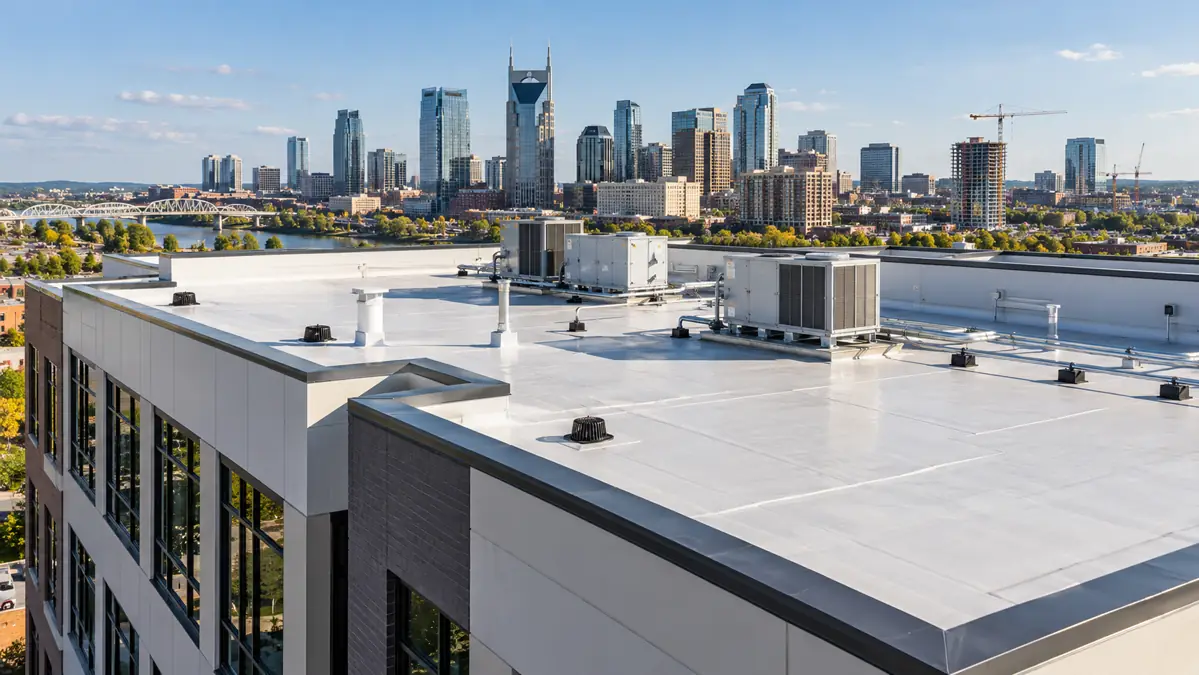
Modified bitumen roofing is a practical option for many commercial and residential low-slope roofs. It is designed for buildings that need a durable waterproofing assembly, particularly where rooftop equipment, regular maintenance access, or complex roof details are part of the picture. This guide covers modified bitumen roofing pros and cons, installation choices, and the building conditions that shape the right recommendation.
The right roof is never selected by material name alone. Drainage, the existing roof assembly, insulation, rooftop traffic, building use, and installation conditions all affect the recommendation. Titan’s commercial roofing services can help property owners compare the available options for a specific building.
What Is a Modified Bitumen Roof?
A modified bitumen roof, often called a mod bit roof, is an asphalt-based membrane system used on low-slope or flat roof assemblies. The asphalt is modified with polymers that improve flexibility and weather resistance. Reinforced membrane sheets are installed in overlapping layers to form a durable, multi-ply waterproofing surface.
The term “flat roof” can be misleading. A roof may look flat from the ground, but it still needs positive drainage so water can move toward drains, scuppers, or gutters. A modified bitumen system protects the roof assembly while its slope and drainage details move water off the building.
How a Modified Bitumen Roofing System Is Built
Modified bitumen is a roof assembly, not just a roll of membrane. A specified modified bitumen roof system can include several components. The exact components depend on the building and the manufacturer specification, but a low-slope system may include:
- A structural deck that supports the assembly
- Insulation, which may be tapered to help direct water to drainage points
- A cover board or approved substrate beneath the membrane
- A base sheet and, in some assemblies, additional interply sheets
- A weather-facing cap sheet with a smooth, granulated, or compatible coated surface
- Flashings at walls, curbs, drains, penetrations, and roof edges
The multiple layers are a defining feature of modified bitumen roofing. A quality installation also depends on how those layers, seams, and transitions are detailed. A membrane alone cannot solve standing water, wet insulation, deteriorated decking, or poorly designed drainage.
SBS vs. APP Modified Bitumen
The two most common modified bitumen formulations are SBS and APP. Both are asphalt-based membranes, but the polymer modifier changes how the material behaves and which installation methods may be appropriate.
| System | General characteristic | Typical consideration |
|---|---|---|
| SBS modified bitumen | More rubber-like and flexible | Often considered where movement and temperature changes are an important part of the roof design |
| APP modified bitumen | More plastic-like with strong heat and UV performance | Commonly associated with heat-welded installation methods |
The best option depends on the roof assembly, local exposure, installation plan, and manufacturer requirements. A contractor should explain the specified membrane, number of plies, attachment method, and protection planned for the finished surface.
How Mod Bit Roofs Are Installed
Modified bitumen membranes can be applied in several ways. The method should be selected for the building, approved system, and jobsite conditions.
Torch-applied or heat-welded
With a torch-applied system, a trained installer heats the underside of the membrane so it bonds to the layer below. It can create strong adhesion, but open-flame work requires careful safety planning. It may not be the preferred approach for every occupied or sensitive building.
Hot-mopped
Some asphaltic roof assemblies use heated asphalt to bond membrane layers. This is a specialized installation method that requires the correct equipment, materials, and application conditions.
Cold-applied
Cold-applied systems use an approved adhesive rather than an open flame. They can be useful where flame use is not suitable, although surface preparation and adhesive compatibility remain essential.
Self-adhered
Self-adhered membranes have a factory-applied adhesive protected by a release film. The membrane is rolled into place after the substrate is properly prepared. This approach can reduce the use of heat, but it still relies on correct priming, temperature conditions, laps, and detailing.
What Modified Bitumen Roofing Does Well
Modified bitumen is often considered for low-slope roofs where durability and repairability matter. Its potential advantages include:
- Multi-ply protection: More than one membrane layer can provide added waterproofing redundancy when the system is specified and installed correctly.
- Resistance to routine roof traffic: The system can be a practical choice for buildings with equipment access, provided service paths are protected as needed.
- Repair options: Isolated issues such as damaged areas, deteriorated flashings, or open laps may sometimes be addressed without replacing the full roof. A commercial roof repair assessment can determine whether a localized repair is appropriate.
- Installation flexibility: Depending on the specified membrane, modified bitumen can be torch-applied, hot-mopped, cold-applied, or self-adhered.
Trade-Offs to Consider
Modified bitumen is not automatically the best fit for every low-slope roof. Property owners should also consider the following:
- Seams and details require skilled installation. Laps, flashings, penetrations, and edge details must be fully bonded and protected.
- Drainage still matters. Ponding water and clogged drains can shorten the useful life of many roof assemblies, including bitumen roofs.
- The roof surface needs attention. Granule loss, cracking, blisters, open laps, and worn flashing are warning signs that call for inspection.
- Reflectivity depends on the surface. A dark surface, granulated cap sheet, or compatible reflective coating can perform differently. The full roof assembly should be evaluated before choosing a system for energy-related goals.
- The existing roof controls the scope. Moisture below the surface, damaged insulation, structural concerns, or incompatible materials can change a repair, coating, or replacement recommendation.
Modified Bitumen vs. TPO, EPDM, and BUR
Different low-slope roofing systems solve different problems. This comparison is a starting point, not a substitute for a site-specific inspection.
| Roofing system | Basic construction | Often considered when | Key decision point |
|---|---|---|---|
| Modified bitumen | Multi-ply asphalt-based membranes | Durability, repairability, and rooftop traffic are priorities | Drainage, seams, flashing, and surface protection |
| TPO | Single-ply reflective membrane with welded seams | A light-colored membrane and low-slope efficiency are priorities | Seam quality, substrate condition, and penetration detailing |
| EPDM | Single-ply synthetic-rubber membrane | A flexible, established low-slope system is being considered | Seam, flashing, and surface-protection needs |
| BUR | Multiple layers of roofing materials and asphalt | A traditional multi-layer asphaltic assembly is being evaluated | Weight, installation process, and project-specific detailing |
If TPO is one of the systems under consideration, review Titan’s TPO roofing guide alongside the proposal. The better choice depends on the roof’s condition and the owner’s priorities, not on a blanket claim that one material is always better.
When a Modified Bitumen Flat Roof Is a Good Fit
Modified bitumen can make sense for commercial properties with low-slope roof areas, rooftop mechanical equipment, frequent maintenance access, or multiple transitions that need robust waterproofing details. It may also be evaluated when an existing asphaltic roof is being repaired, restored, or replaced.
For a residential property, a residential modified bitumen roof may be considered on a porch, addition, transition, or other low-slope section where conventional shingles are not appropriate. The recommendation should account for drainage, the connection to adjacent roof materials, and the complete waterproofing assembly.
Maintenance and Repair Warning Signs
Routine inspection helps identify manageable problems before water reaches insulation or interior finishes. Contact a roofing professional if you notice:
- Open laps, lifted edges, or visible splits in the membrane
- Blisters, cracking, bare areas, or loss of surface granules
- Deteriorated flashing around walls, pipes, curbs, or drains
- Persistent standing water or clogged drainage points
- Interior water marks, new leaks, or damage after severe weather
A compatible flat roof coating may be an option for a sound, suitable roof. A coating should not be used to conceal wet materials, unresolved drainage issues, or a failing roof assembly.
Frequently Asked Questions About Modified Bitumen Roofing
Not exactly. Torch-down is one installation method for certain modified bitumen membranes. Other systems may use hot asphalt, cold-applied adhesive, or self-adhered membranes. The specified membrane and the building conditions determine which method is appropriate.
No. Both materials are supplied in rolls, but modified bitumen is a reinforced, polymer-modified membrane system designed for low-slope roof assemblies. A roofing professional can identify the existing material and determine whether it is part of a complete, compatible assembly.
Sometimes. The answer depends on the condition of the membrane, flashings, insulation, drainage, and substrate. A repair or restoration may be practical when damage is isolated and the existing assembly remains sound. Widespread deterioration or trapped moisture can require a different solution.
Each system has strengths. Modified bitumen offers a multi-ply asphaltic approach, while TPO is a single-ply membrane with heat-welded seams and a commonly light-colored surface. An inspection should compare the systems against the building’s drainage, traffic, existing materials, operating needs, and project goals.
Talk With Titan About Your Low-Slope Roof
Choosing a roof system requires more than comparing product names. Titan Roofing can inspect the existing assembly, identify drainage and detail concerns, and explain whether repair, restoration, or replacement fits the property. Contact the team to discuss a modified bitumen roofing option for your commercial or low-slope roof.