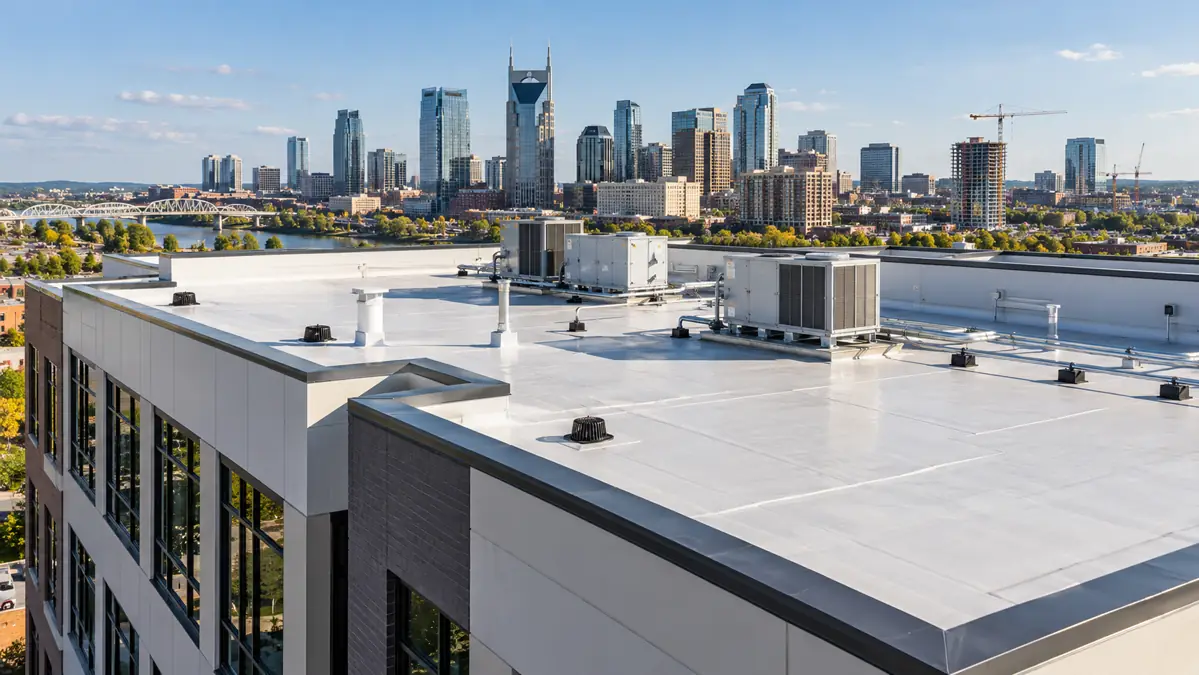
New construction and expansion projects create an important roofing decision before a building opens. The roof must suit the structure, protect the interior, support rooftop equipment and fit the way the property will operate over time. For Nashville owners, developers and facility teams, early coordination can reduce late design changes and help create a clearer path from construction to long-term maintenance.
Commercial roofing is not a one-material decision. The building’s size, use, roof geometry, drainage plan, insulation requirements and mechanical layout all affect the system and scope. Titan Roofing & Construction works with owners and project teams through commercial roofing services that include repair, replacement, coatings and low-slope system options.
Start with the building’s actual use
An office building, retail center, warehouse and medical facility can all have different roofing needs. Rooftop traffic, equipment service paths, future tenant improvements and interior humidity loads may affect the design details that make the roof easier to maintain.
At the planning stage, project teams should discuss:
- The roof deck type and expected roof loads
- HVAC, solar, vents, drains and other planned penetrations
- Safe access for future inspection and maintenance
- Drainage paths and areas where water could collect
- Insulation and energy-code requirements for the project
- Phasing needs if construction or occupancy will occur in stages
These questions are not just design paperwork. They help define where the roof needs reinforced details, how crews will access the work and how the finished system can be serviced without unnecessary disruption.
Choose a system based on the roof, not a trend
TPO, EPDM, modified bitumen, metal and roof coatings can each have a role in commercial roofing. The appropriate system depends on the building and project scope. A low-slope roof with many penetrations may need different detailing than a large warehouse roof with open field areas. A metal roof can serve certain building types well, but its slope, panel design, penetrations and transitions still need careful planning.
If a metal roof is under consideration, review the options with a contractor experienced in commercial metal roofing. If the project has an existing roof that may be restored rather than replaced, ask whether roof coatings are suitable after a condition assessment. Not every roof is a candidate for restoration.
Make drainage a construction priority
Heavy rain and seasonal storms place real demands on a commercial roof. Drainage should be addressed in the design and verified in the field, not treated as a minor finish detail. Water that remains on a roof can point to slope, drain capacity or obstruction concerns that deserve review.
The roofing scope should identify drains, scuppers, gutters where applicable, crickets and transitions around rooftop equipment. It should also include a plan for debris control during construction. Loose materials and blocked drains can create avoidable water-management problems before the building is even occupied.
Coordinate the roof with other trades
Commercial roofs often intersect with mechanical, electrical, plumbing and exterior-envelope work. When those trades install new equipment or make changes after the roof is complete, every penetration and curb needs proper coordination. A late-cut opening without correct flashing can become a leak path.
Owners can protect the finished roof by documenting who will be responsible for penetrations, flashing details and final inspections. Keep roof access controlled, and ask service vendors to report damage or sealant concerns they notice during routine work.
Plan maintenance before turnover
The roof is easier to manage when the operations team receives clear closeout information. Before final turnover, request records for the installed system, roof plan, drainage locations, equipment curbs and maintenance recommendations. Set an inspection cadence based on the property, local weather and manufacturer requirements where applicable.
Routine inspections help property teams catch seam issues, punctures, loose flashings and blocked drains early. If a concern appears after occupancy, prompt commercial roof repair can help limit disruption to tenants and operations.
Build a roof plan that supports the property
Nashville commercial projects benefit from a roofing plan that considers construction details and the building’s next several years of use. By reviewing drainage, access, penetrations and system choices early, owners can make informed decisions without relying on assumptions about one material or one price point.
For a new construction project, major renovation or commercial roofing consultation, contact Titan Roofing & Construction. A project-specific conversation can help clarify the roofing scope and align it with the building, operations and long-term maintenance needs.