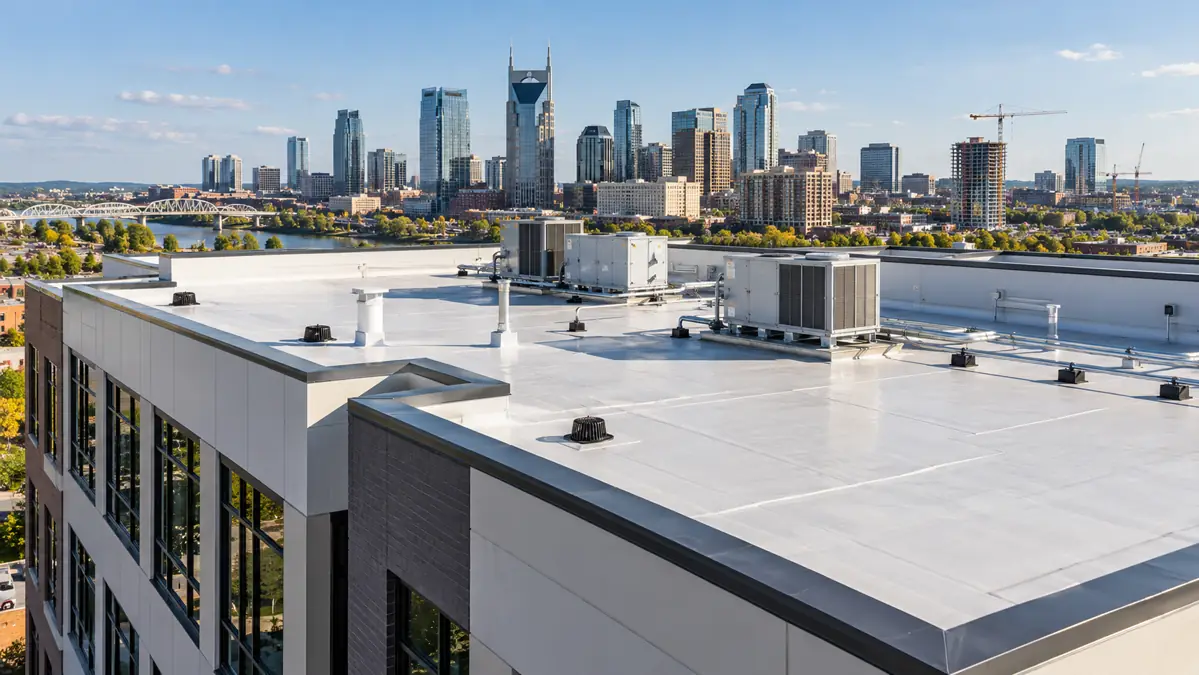
For a commercial property owner, the lowest proposal is not always the lowest long-term roofing cost. Modified bitumen and TPO are both common choices for low-slope commercial roofs, but they manage heat, seams, drainage and maintenance in different ways. The better fit depends on the building, the existing roof, its condition and the work planned around it.
If you are comparing systems, start with a site-specific assessment. A qualified contractor can identify moisture, damaged insulation, flashing issues, drainage concerns and details around penetrations before those items become surprise costs in the scope. Titan Roofing & Construction can help property owners evaluate options through its commercial roofing services.
How modified bitumen and TPO differ
Modified bitumen is an asphalt-based roofing system. It is typically installed in multiple layers and may be applied with self-adhered, cold-process or heat-welded methods, depending on the system and project requirements. It has a long history on low-slope roofs and can be a practical option for buildings that need a durable, layered assembly.
TPO roofing is a single-ply membrane. Crews install it in wide sheets and heat-weld the seams. Many TPO membranes are light-colored, which can help reflect sunlight, although energy performance still depends on the full roof assembly, insulation, building use and local conditions.
Neither material is automatically right for every roof. A building with frequent foot traffic, complex rooftop equipment or many penetrations needs close attention to detail work, regardless of the membrane selected.
What affects the installed cost
Material price is only one part of a commercial roofing budget. The installed cost can change significantly with the work required beneath and around the finished surface.
Key cost factors include:
- Roof size, shape and access for crews and materials
- Tear-off needs, including wet or damaged insulation
- Deck repairs and the condition of the existing assembly
- Drainage corrections, curbs, parapets and edge details
- HVAC units, skylights, vents and other penetrations
- Required insulation, attachment method and local project conditions
For example, a simple open roof can require less labor than a roof with numerous curbs and service paths, even when the square footage is similar. A professional scope should separate the roofing system from related repairs so decision-makers can see what drives the budget.
Long-term costs to compare
When owners compare modified bitumen vs. TPO roofing costs, they should look beyond installation day. Ask how the proposed system handles the conditions your building actually sees.
Seams and detail work
TPO seams are heat-welded, while modified bitumen systems use laps and layered details. Both depend on proper installation and inspection. The quality of flashing, penetrations and edge work often matters as much as the field membrane.
Maintenance and repair access
Commercial roofs need periodic inspection, especially after storms, high winds or work by other trades. A maintenance plan can help identify open seams, punctures, drainage issues and aging sealants before water reaches the assembly. If a roof already has active leaks, commercial roof repair should be part of the conversation before deciding on replacement.
Heat, standing water and building use
West Tennessee heat, humidity and heavy rain make drainage and material selection important. Ponding water may point to a slope or drainage issue that a new membrane alone will not solve. Kitchen exhaust, rooftop traffic, tenant operations and future equipment plans can also influence which system is easier to maintain.
Questions to ask before choosing a system
Use the roofing consultation to get clear answers about the building and the proposed scope:
- Is the existing roof dry enough for restoration, or does it need tear-off?
- What insulation, drainage or deck repairs are included?
- How will the contractor handle curbs, drains, seams and penetrations?
- What maintenance and inspection steps make sense after installation?
- Could a coating or another restoration approach be appropriate for this roof?
In some cases, a roof coating may be evaluated as an alternative to full replacement. That option depends on the existing roof condition, substrate and project goals. Explore commercial roof coating systems with a contractor rather than assuming every aging roof is a candidate.
Make the decision with a complete scope
Modified bitumen and TPO can both serve commercial properties well when the system matches the roof, installation details and maintenance plan. The most useful comparison is not just a price per square. It is a documented scope that explains the condition of the current roof, the work needed to prepare it and the details that protect the building after installation.
If you own or manage a commercial property in the Mid-South, request a roofing consultation with Titan Roofing & Construction. A detailed inspection can help you compare modified bitumen, TPO and other options based on your building rather than a generic price range.